
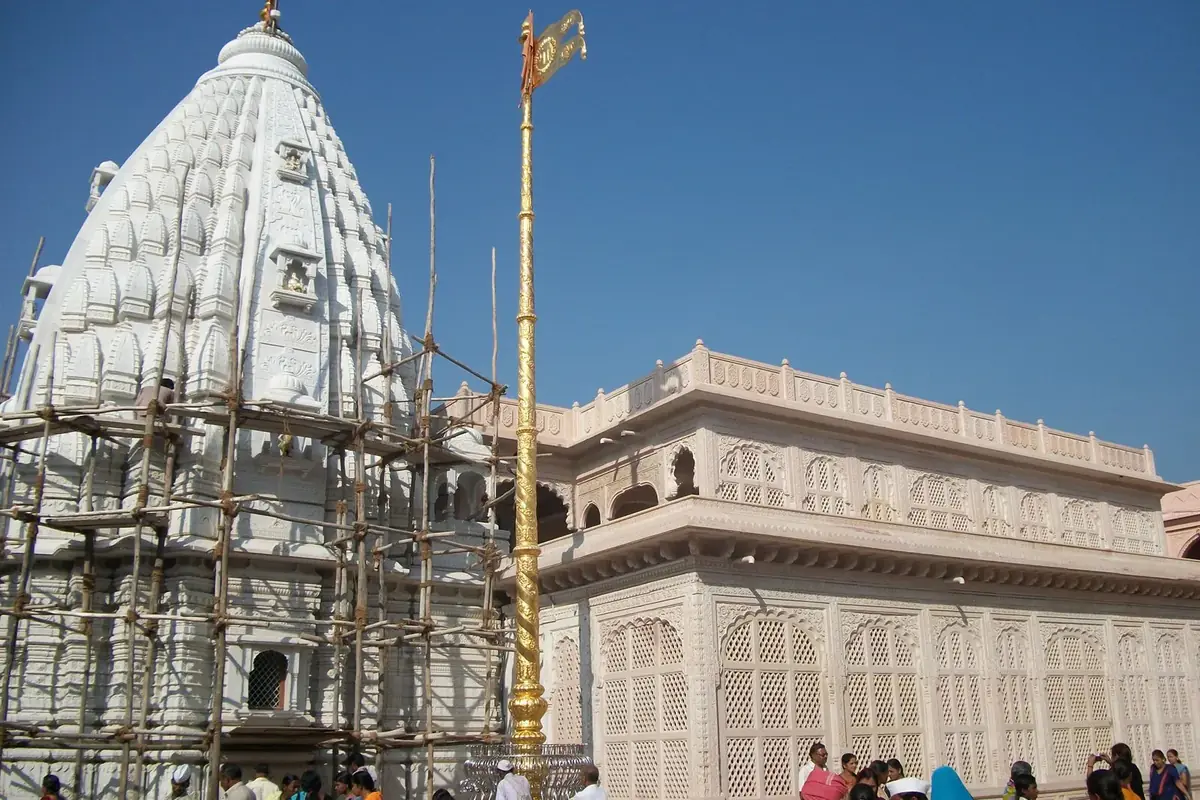
This gajanan maharaj aarti timings complete guide sets out a whole temple day in order. It covers five prayers, three darshan windows, the meals between them and the rooms that let you stay for the last session. It is written for someone who wants the full picture before booking a train.
A gajanan maharaj aarti timings complete guide in one page
The day is shaped by five aartis, three darshan windows and meals at fixed hours. Nothing else on the campus timetable is as dependable as that rhythm. Once you know it, you can predict how a visit will feel before you arrive.
The two routines work differently. Aarti is a gathering at a set hour, while darshan is a stretch of open hours during which you can enter. Miss an aarti and you wait for the next one. Miss a darshan window and the gate closes until the next stretch begins.
A first-time reader often assumes the five prayers are the only moments worth attending. In practice the darshan windows carry most of the day, and the prayers punctuate them. That is why the two lists belong on the same page.
The five prayers, from first light to the last
Mangal, Shringar, Madhyahna, Sandhya and Shayan are the five daily aartis, spaced from early morning to late evening. Their approximate hours are 5:00 AM, 8:00 AM, 12:00 PM, 7:00 PM and 8:30 PM. Festival days can move them, so the published pattern is a guide rather than a promise.
The first one asks for an early night. Anyone staying on the campus can reach it on foot, but the hour itself is the difficulty, not the distance. The second is easier for a household with children, because the first darshan window has already opened.
The midday prayer lands in the busiest part of the day, and the two evening prayers bracket the dinner hour. Midday and evening aartis draw the largest crowds. Reach the gathering area a little early if one of those is your choice.
The last prayer arrives half an hour before darshan closes at 9:00 PM. Anyone attending it should eat before the session or after it, never in the middle of it.
Three darshan windows and the pauses between them
Darshan does not run continuously. It normally runs in three windows: 6:00 AM to 11:30 AM, 12:30 PM to 4:30 PM and 5:00 PM to 9:00 PM. Each window is generous on its own, and the skill lies in entering early rather than at the end.
The sanctum pauses between darshan windows for cleaning and ritual, so the queue can stall near the hour. A visitor who understands the pause plans to be inside well before it, or waits somewhere shaded until the next window opens. The pause is short, but it turns a calm arrival into a standing wait.
Notice how the windows relate to the prayers. The morning window opens an hour after the first aarti. The afternoon window opens half an hour after the midday aarti. The evening window opens two hours before the seven o'clock prayer and closes half an hour after the last one.
If a queue looks long, check the hour before deciding to join. The same line moves very differently at 7:00 AM and at 11:20 AM. One useful habit is to write the three windows on a card and keep it in a pocket, because a card does not need charging.
Meals, rooms and the short walk between them
Breakfast runs 7:00 to 9:30 AM and lunch 12:30 to 2:30 PM. Dinner is served 7:00 to 9:00 PM. The guest buildings sit within easy walking distance of the temple gates and the dining hall, so a meal and a darshan can share the same hour.
Rooms range from non-AC budget options to 2-bed and 4-bed AC rooms, family suites and dormitories. Check-in begins at 12:00 PM and check-out is by 10:00 AM. The first morning of a stay is therefore spent without a room, and the last morning ends early.
Room choice affects the day more than the rate does. A dormitory bed means sharing and an early start, while an AC room with two beds gives a couple somewhere to retreat at noon.
Read the whole schedule once for shape, then again for decisions. Choose one prayer to anchor the day, confirm the times near your travel date, and let the remaining sessions fill the space that is left.
Related information
5 Important Points to Know
- 1
Five prayers, three darshan windows and three meal sittings form the whole day.
- 2
Aarti happens at a set hour, while darshan stays open across a stretch of hours.
- 3
The morning window opens an hour after the first aarti of the day.
- 4
A brief closure between windows slows the gate queue near each boundary.
- 5
Check-in from noon and check-out by 10:00 AM shape the first and last mornings.
Booking assistance
Plan Your Stay in Shegaon
If you are planning a visit for Gajanan Maharaj darshan, share your preferred room type, travel dates and group size with the booking desk. Current room rates and availability can change, so confirm the latest details before you travel. Read the Shegaon stay and darshan guide for local details.
+91 99278 46562 · Booking assistance, not an official reservation desk.
Frequently Asked Questions
Plan your visit
Pages that answer the practical questions this guide raises.
Related Guides
Gajanan Maharaj Aarti: Before Your Visit
Get ready for your pilgrimage by learning the gajanan maharaj aarti timings, darshan windows, and rules before you arrive in Shegaon.
Gajanan Maharaj Aarti: Checklist
A practical visitor checklist for attending the daily gajanan maharaj aarti at Shri Gajanan Maharaj Sansthan in Shegaon, covering timings, entry rules, and helpful preparations.
Gajanan Maharaj Aarti: Complete Guide
Plan your visit with this comprehensive gajanan maharaj aarti complete guide, detailing daily prayer schedules, darshan windows, and helpful tips for pilgrims in Shegaon.
Gajanan Maharaj Aarti: Family Visit Guide
A practical gajanan maharaj aarti family visit guide for planning a peaceful journey to Shegaon, covering daily timings, rules, and Sansthan facilities.