
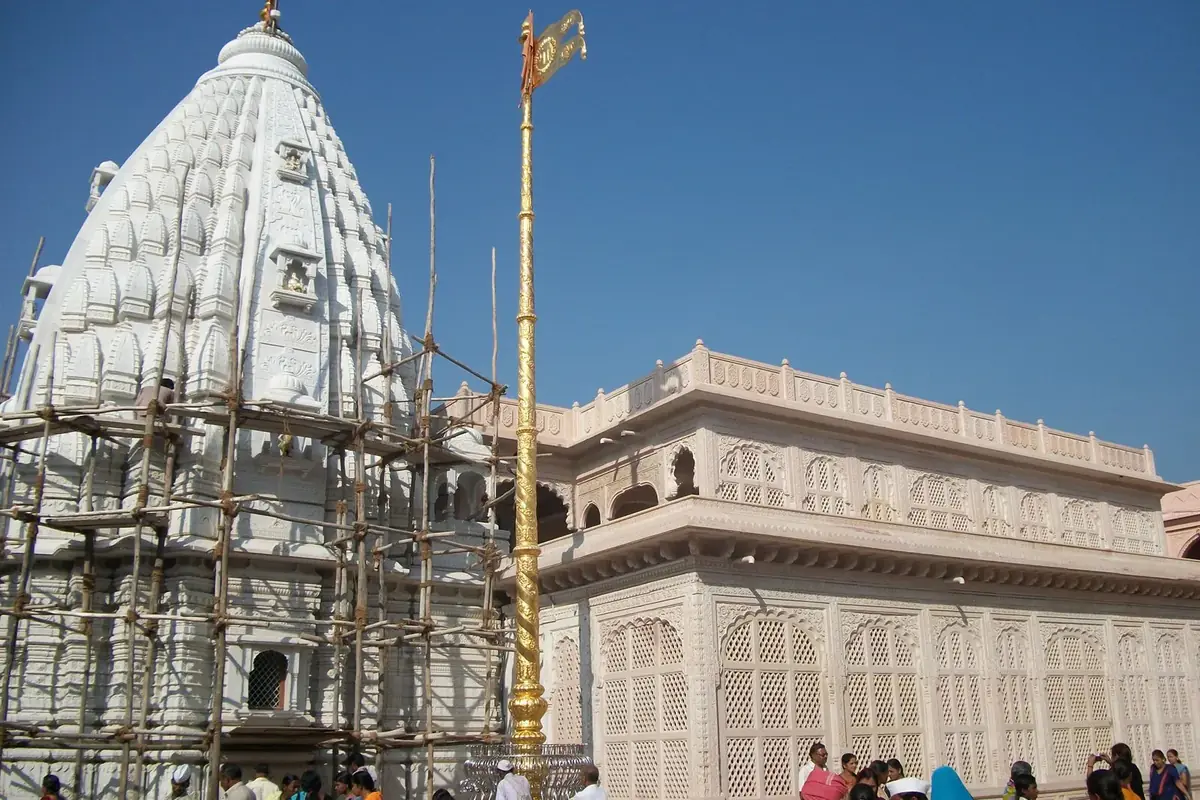
Shri Gajanan Maharaj is the saint associated with Shegaon, a small town in Buldhana district of Maharashtra. Devotees travel from across India to visit his samadhi, attend aarti and stay at the Sansthan that bears his name. Yet the historical record is deliberately thin: he did not leave a written doctrine. Much of what is known comes from the testimony of those who lived with him and from later devotional biographies. This page explainsWho was Shri Gajanan Maharajin practical detail for pilgrims planning a Shegaon visit.
This guide sets out the broad outline of his life, the stories that shaped the tradition and the practical way his teaching is expressed at Shegaon today. It is an introduction for a first-time visitor, not a substitute for the traditional texts or for guidance from the Sansthan.
A sudden appearance in Shegaon
Shri Gajanan Maharaj is believed to have appeared in Shegaon on 23 February 1878, the day of Magh Vaidya Saptami, under a banyan tree near the Paturkar palace. He was a young man, and his origins were never established with certainty. Different accounts place his birth elsewhere, but none has been accepted as definitive.
He remained in and around Shegaon for the rest of his life. He was known by several names, including Gin Gine Buwa, Ganpat Buwa and Awaliya Baba. The variety of names reflects the way different communities encountered him: as a madman, a wandering ascetic, a teacher, a friend of the poor and a figure of extraordinary presence.
The saint without a throne
What stands out in the accounts is his refusal of ordinary religious status. He did not set up a lineage, appoint a successor or build a following around a seat of authority. The Sansthan that now bears his name was formed in his presence in 1908, not after his death. Its work was organised around service rather than around a guru-disciple succession.
This matters for understanding Shegaon. The temple is not a dynastic shrine. It is a place where a community of devotees and volunteers continues a pattern of daily worship, food distribution and care for pilgrims.
Teachings in practice
Gajanan Maharaj left no systematic philosophy. His teaching is remembered through stories, sayings and the habits he encouraged. Several themes recur in the tradition.
Food is sacred
One of the best-known stories describes him eating food that others had thrown away, treating it as a lesson against waste. The memory shapes the way the Sansthan kitchen works: food is cooked in large quantities, served with care and not treated casually. Visitors are asked to take only what they can finish.
Service without discrimination
The Sansthan's founding rules and its later work emphasise that service is offered without distinction of caste or background. The dining hall, the accommodation and the volunteer teams are organised around that principle. For a pilgrim, the practical expression is simple: everyone waits in the same queue, eats the same food and receives the same basic courtesy.
Living in the present
Many of the remembered exchanges are short and enigmatic. He is said to have met people where they were, without demanding a particular ritual or qualification. Devotees often describe his teaching as an invitation to pay attention to the ordinary: the next meal, the next person, the next moment of need.
Samadhi and the temple
Shri Gajanan Maharaj took samadhi on 8 September 1910. The place was said to have been indicated by him in advance, and the temple was prepared around it. His samadhi lies below the shrine of Shri Ram, whom he is said to have worshipped regularly.
The temple complex grew around that point. Today it includes the samadhi mandir, the dhooni, the paduka, shrines to Vitthal and Rukmini, and a Hanuman temple near an old umbar tree. The daily rhythm of aarti, darshan and prasad gives the site its character.
What a visitor will see
- The samadhi mandir, the focal point of the pilgrimage.
- The dhooni, where the sacred fire is kept.
- The paduka, the wooden sandals associated with the saint.
- The Vitthal and Rukmini shrines within the complex.
- The Hanuman temple and the old umbar tree nearby.
The Sansthan today
The Shri Gajanan Maharaj Sansthan was formed on 12 September 1908. Its work has expanded far beyond the temple: Bhakta Niwas accommodation, the Mahaprasad kitchen, the Anand Sagar campus, the free shuttle service and branches at other pilgrimage towns. The scale is large, but the organising idea is still service.
For pilgrims, the practical side matters. Read thedarshan and aarti guide, check theaarti timingsand plan your stay through theBhakta Niwas pageThefull Gajanan Maharaj guidegoes deeper into the tradition and the temple.
Who Was Shri Gajanan Maharaj: How to approach the visit
A first visit can be overwhelming. The crowds, the noise and the sheer size of the complex compete for attention. The tradition suggests a simpler approach: arrive with a little time, attend one aarti properly, eat one meal in the dining hall and sit quietly for a few minutes without trying to see everything.
That is also the most practical advice. Shegaon rewards patience more than planning. Keep your schedule loose, respect the queue and leave room for the unexpected conversation or the quiet moment that makes the journey memorable.
5 Important Points to Know
- 1
Shri Gajanan Maharaj appeared in Shegaon in 1878 and took samadhi there in 1910.
- 2
He left no written doctrine or appointed successor; his teaching survives through stories and the Sansthan's service tradition.
- 3
The Sansthan was formed in 1908 in his presence and is organised around food, accommodation and pilgrim care.
- 4
The samadhi mandir, dhooni, paduka and surrounding shrines form the core of the temple visit.
- 5
Attend one aarti properly and leave time to sit quietly rather than trying to see everything.
Booking assistance
Plan Your Stay in Shegaon
If you are planning a visit for Gajanan Maharaj darshan, share your preferred room type, travel dates and group size with the booking desk. Current room rates and availability can change, so confirm the latest details before you travel. Read the Shegaon stay and darshan guide for local details.
+91 99278 46562 · Booking assistance, not an official reservation desk.
Frequently Asked Questions
He is believed to have appeared in Shegaon on 23 February 1878 and took samadhi there on 8 September 1910. His origins before Shegaon are not established with certainty.
No written doctrine is attributed to him. His teaching is remembered through the accounts of devotees and later biographies such as the Gajanan Vijay Granth.
The tradition emphasises service without discrimination, respect for food, simplicity and attention to the present moment. At Shegaon this is expressed through the dining hall, accommodation and volunteer work.
It is in the Samadhi Mandir at Shegaon, below the shrine of Shri Ram within the Sansthan temple complex.
Plan your visit
Pages that answer the practical questions this guide raises.
Related Guides
Gajanan Vijay Granth: What It Is and How to Read It
A practical introduction to the Gajanan Vijay Granth, the devotional biography read in homes and temples, and the tradition of a seven-day parayan.